In-Store Sale and Promotion Posters
- Free shipping
- Free proof — pay after you approve
- Our designer emails your free proof within 1 business day. You're charged only once you approve it. Changes are free, and you can cancel free any time before you approve.
- Semi-gloss paper — rich color, no heavy glare
- Won’t stick to the glass when framed
- Ready to frame · frame not included
How it works
- Upload your filePhoto, artwork or PDF. No file yet? Order now, upload later.
- Free proofA designer checks crop and sharpness, then emails it within 1 business day.
- Printed in 2 daysOn semi-gloss poster paper, 2 business days after you approve.
- Ships free, flatUp to 15″ goes in a rigid mailer that won’t bend.
- Ships free, rolledOver 15″ ships rolled in a sturdy tube.
On real walls
How to get it right
The number first
A sale poster in the aisle is read in passing by someone looking at the stock, not the wall. The discount goes first and largest, then what it applies to, then the end date. A promotion with a long sentence of conditions reads as fine print and gets ignored.
Frames that stay, posters that change
Put standard frames or sign holders at the end caps and the counter once, and print into them for each promotion. Our semi-gloss paper does not fuse to frame glass, so last month's poster comes out cleanly when the next goes in. 22x28 fits the standard floor sign holder, 18x24 suits an end cap or a wall frame, and 11x14 fits a counter frame.
For the window itself, use a cling
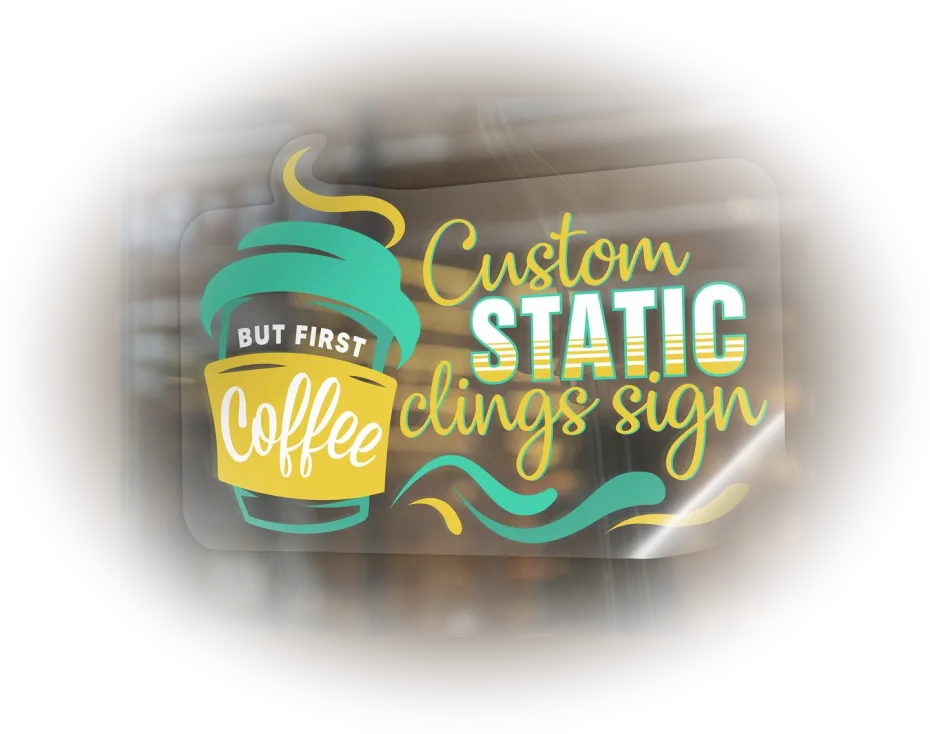
The sale sign facing the street belongs on the glass, and for that a window cling is the right material - it reads from outside and comes off without residue when the sale ends. The poster is for the inside of the shop.
Sizing a poster for the fitting room
A fitting room sign is read at close range by someone standing still, not glanced at from across the store, so it does not need the size a sale sign at the entrance does - 11x14 in a small frame or holder fits the space most fitting rooms have without crowding the mirror or the door. Because it is paper rather than a laminated sign, a fitting room poster in a high-traffic store will show wear faster than one on a quieter wall; keep a spare of the design on hand so a worn one can be swapped rather than left up looking tired, especially during a busy sale weekend when the same sign gets brushed against dozens of times a day.
Wording a promotion so it isn't confusing
A straight percentage-off sign needs almost no explanation - the number is the whole message. A buy-one-get-one or a tiered discount needs one short line spelling out exactly what qualifies, because a shopper who has to work out the math themselves at the rack often assumes the worse case and walks past. Put the offer's one condition - final sale, in-store only, excludes a specific brand - in a single small line below the headline number rather than a paragraph of terms, which reads as fine print and gets ignored.
Questions people ask about these
What size for an in-store sale poster?
22x28 inches for standard floor sign holders, 18x24 for end caps and wall frames, 11x14 for counters.
Can I reorder quickly when a promotion changes?
Each new promotion is its own design with its own free proof, and one poster per design is a normal order. Production is two business days after approval and shipping 3-5 business days, so order a week before the sale starts.
Can I put it in the shop window?
Taped inside the glass, yes. For a sign on the glass itself that reads from the street, a window cling works better.
Will they stick to the frame glass?
No - the semi-gloss paper is made not to fuse to frame glass.
Is there a minimum?
No. One poster per design.
What size sign works in a fitting room?
11x14 in a small frame or holder is the common choice - close-range signage doesn't need the size a sign at the entrance does. Since it's paper, keep a spare on hand in a busy store so a worn one can be swapped out.
How do I word a buy-one-get-one sign so shoppers understand it?
Put the offer's one condition in a short line below the headline, such as 'equal or lesser value' or 'final sale' - not a paragraph of terms. A shopper who has to work out the math themselves often assumes the worse case and moves on.